
What beer production equipment is needed for a complete brewery?
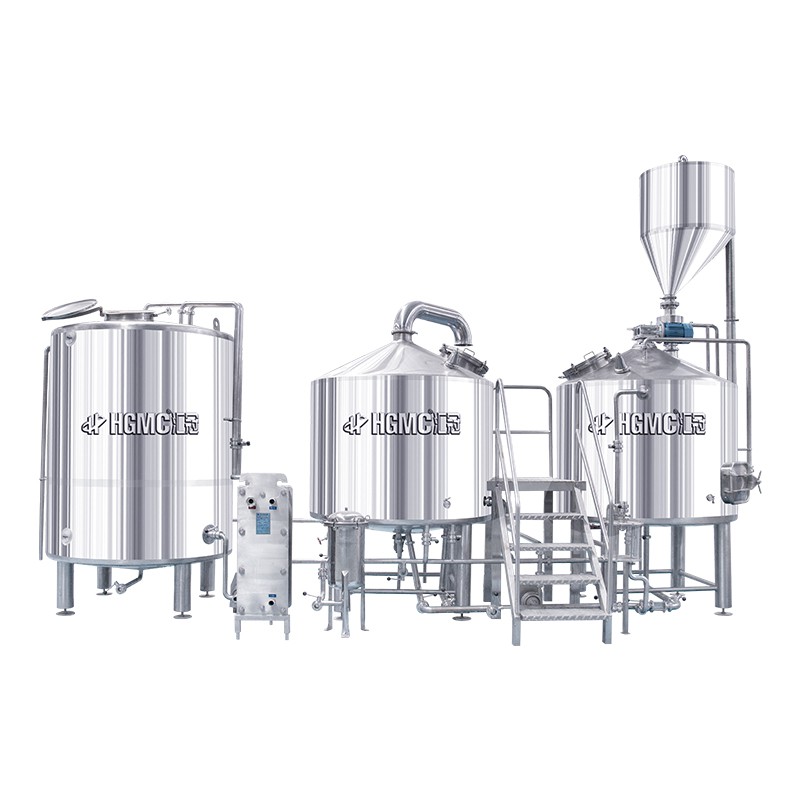
A complete setup requires high-precision integration of stainless steel vessels, thermal management systems, and pneumatic controls to ensure biological stability and repeatable fermentation kinetics. A standard 15hL facility utilizes a 3-vessel brewhouse, a glycol chilling system sized for a 2.5x load factor, and high-pressure steam generators operating at 4 bar. These components, combined with automated CIP skids and sterile wort cooling circuits, maintain the strict microbial hygiene necessary to meet the 99.8% product consistency rate demanded in professional brewing environments. Proper Beer Production Equipment is the primary determinant of yield efficiency and long-term operating costs.
The raw material handling stage begins with a two-roller mill calibrated to a 1.2mm gap, ensuring a 75% husk integrity rate that optimizes lautering performance. Consistent milling prevents stuck mashes while maximizing extract yield during the conversion phase.
Maintaining a grain moisture content below 12% is a prerequisite for consistent mill performance and preventing premature degradation of mechanical rollers during high-volume production cycles.
Precision in the mash tun relies on automated temperature sensors accurate to within 0.1 degrees Celsius, facilitating precise enzymatic breakdown of malt starches. Modern vessels typically utilize variable frequency drives on agitators to minimize shear stress on the grain bed.
After the mash, the wort transfer to the boil kettle involves high-flow sanitary pumps designed to minimize oxygen ingress, which can induce lipid oxidation before the boil begins. Proper flow rates during this transfer stage directly influence the efficiency of hot break separation.
The boil kettle requires a heating intensity of at least 8% evaporation per hour to effectively drive off unwanted volatile compounds like Dimethyl Sulfide (DMS). This stage is supported by steam jackets designed to prevent localized scorching of sugars at the tank walls.
Following the boil, the whirlpool vessel utilizes tangential entry ports to create a controlled vortex that segregates trub from the liquid wort. Data indicates that a 20-minute rest period post-whirlpool results in a 90% reduction in suspended solids before the cooling process.
| Equipment Component | Operational Function | Typical Pressure Rating |
| Mash Tun | Starch Conversion | Atmospheric |
| Boil Kettle | Wort Pasteurization | 4 bar steam |
| Bright Tank | Carbonation | 3 bar pressure |
The heat exchanger serves as the interface between the hot brewhouse and the cold cellar, often utilizing a two-stage cooling design to reduce energy waste. It typically drops wort temperature from 95 degrees to 18 degrees Celsius within a single pass to minimize exposure to atmospheric bacteria.
Once the cooled wort enters the fermenter, yeast pitching occurs under strictly monitored dissolved oxygen levels between 8 and 12 ppm for healthy initial biomass growth. Unitank designs allow for the entire primary fermentation and subsequent maturation to occur within one vessel to reduce contamination risks.
Glycol cooling jackets on fermentation vessels must be zoned to allow for independent temperature control, ensuring that heat generated by yeast metabolism is removed at a rate of 0.5 degrees per hour during peak activity.
Temperature fluctuations in the cellar are the leading cause of ester profile inconsistencies, which is why integrated PLC systems monitor every tank 24 times per hour. These digital records provide a historical audit trail for every batch produced in the facility.
After fermentation, beer is often transferred to a bright tank for carbonation and clarification using sintered stones. This process requires precise pressure regulation to achieve a CO2 volume of 2.5 to 2.8, which is standard for most pale ale and lager styles.
The final packaging stage requires an oxygen-free environment, often using counter-pressure fillers that purge containers with CO2 prior to filling. A successful fill line should maintain a dissolved oxygen level of less than 50 ppb to ensure a shelf-life exceeding 180 days.
| Packaging Metric | Target Value | Monitoring Interval |
| Fill Volume | +/- 1% accuracy | Every 15 minutes |
| Seam Pressure | 0.45 MPa | Every 30 minutes |
| CO2 Saturation | 2.6 volumes | Batch verification |
Maintaining sanitation requires high-flow CIP pumps that deliver a minimum of 2 meters per second velocity through all piping. This kinetic energy is required to mechanically remove biofilms that accumulate despite chemical exposure during standard cleaning cycles.
Compressed air systems must utilize oil-free compressors paired with multi-stage filtration to reach ISO 8573-1 air purity standards. These systems actuate pneumatic valves throughout the facility and ensure that no contaminants reach the beer-contact surfaces.
Water treatment systems often use carbon blocks and reverse osmosis to achieve a baseline water profile that is consistent regardless of the season. Brewers adjust this base water with calcium chloride or gypsum to match the ion requirements of specific beer styles during the initial mash.
Finally, waste management systems, such as grain augers and wastewater pH adjustment tanks, are needed to comply with local discharge regulations. Efficient grain removal systems reduce manual labor costs by 60% compared to manual shoveling methods after each brew day.